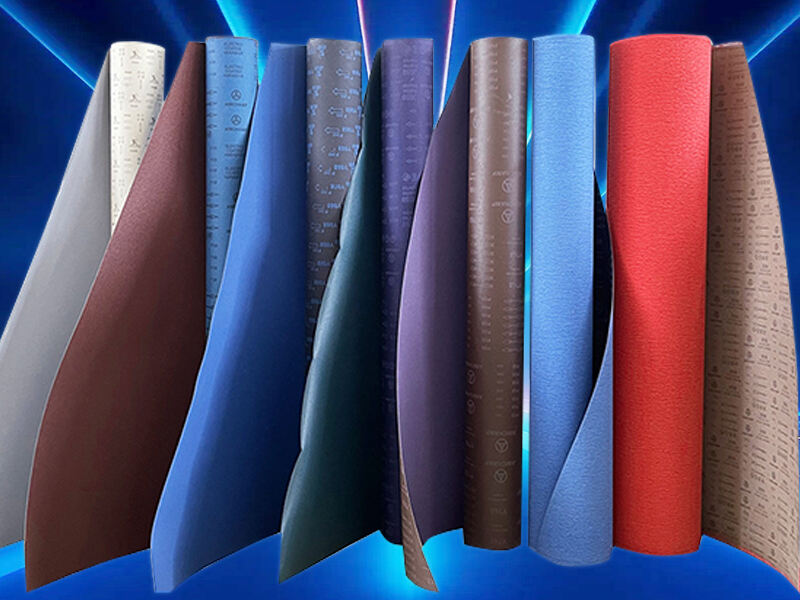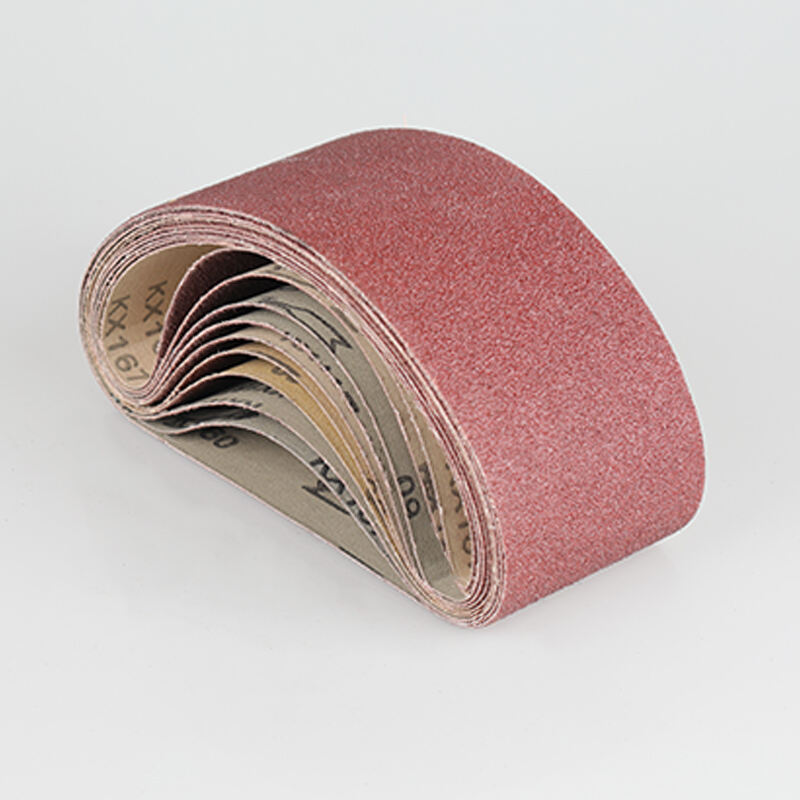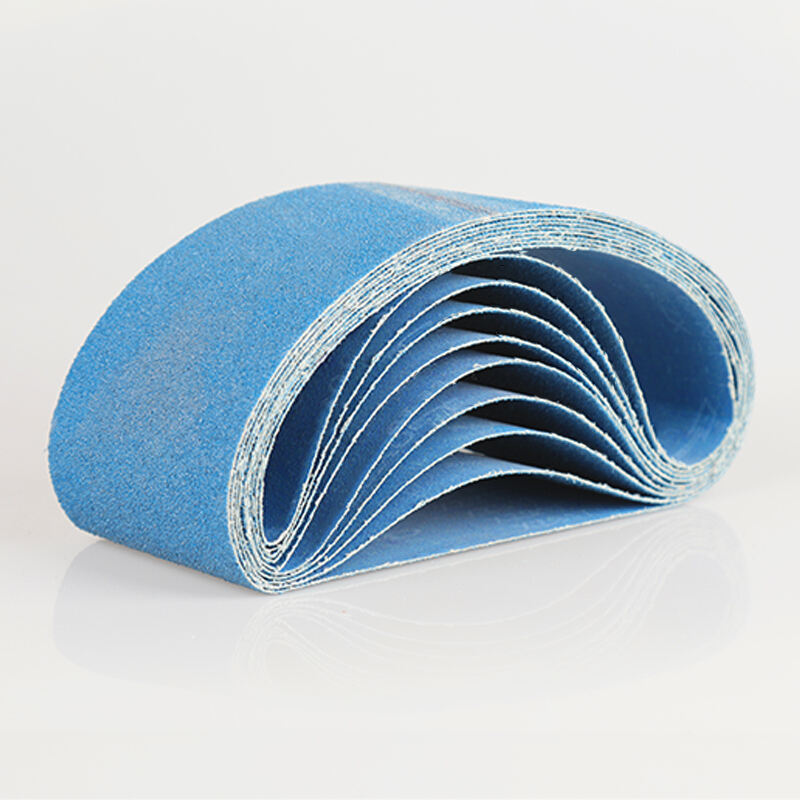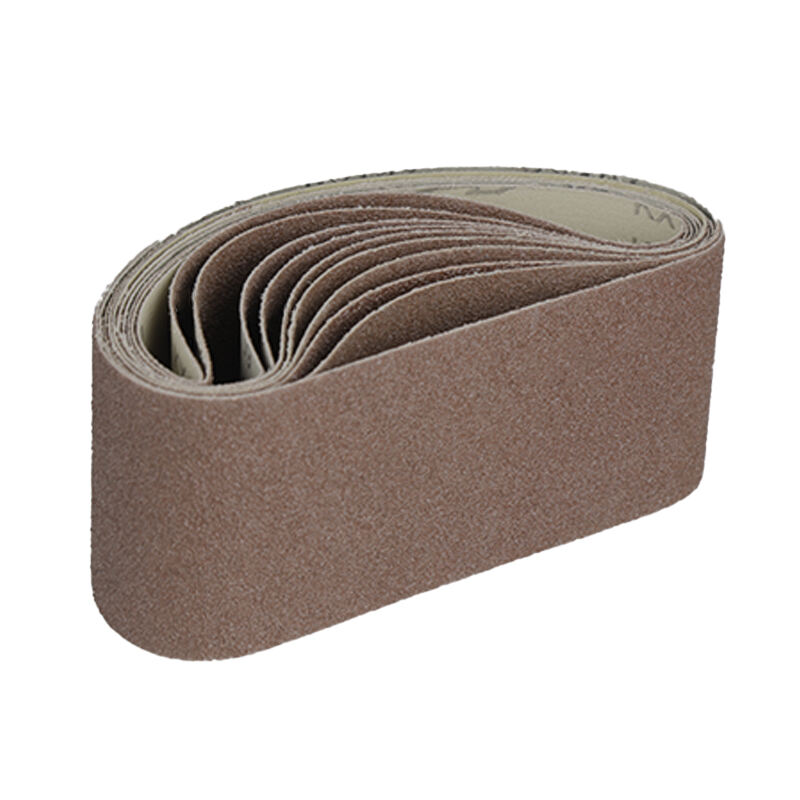
Hard wearing sanding belts are engineered to withstand heavy-duty sanding applications, offering exceptional durability and longevity in demanding industrial environments. Their robust construction starts with a tough backing material, often made from heavy-duty cloth or reinforced paper, which resists tearing and stretching even under high pressure and prolonged use. The abrasive grains, typically composed of aluminum oxide, zirconia alumina, or silicon carbide—materials known for their hardness and wear resistance—are bonded to the backing using strong, heat-resistant adhesives. This combination of high-quality materials ensures that the belt can handle aggressive sanding tasks, such as removing thick layers of material from metal, wood, or composite surfaces, without premature breakdown. These belts are commonly used in industries such as construction, metalworking, and woodworking, where large volumes of material need to be processed efficiently. For example, in metalworking, they are employed to deburr castings, remove rust from steel structures, or shape metal plates. In woodworking, they tackle rough lumber preparation, leveling uneven surfaces, and removing old finishes from large wooden surfaces like floors or furniture. The hard-wearing nature of these belts translates to reduced downtime for belt replacement, increased productivity, and lower overall abrasive costs in high-volume operations. Additionally, their consistent abrasive performance ensures that each workpiece receives the same level of treatment, maintaining uniformity in the final product.