EN
EN
Velcro Disc Compatibility: Matching Discs to Your Polishing Tool
Interface Standards: Random Orbital, DA, and Angle Grinders
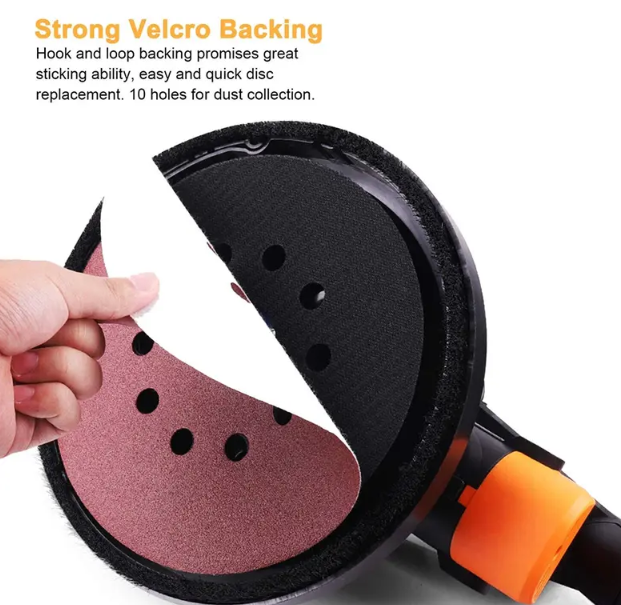
Getting the right Velcro discs for your specific tool isn't just about making things work better it's actually pretty important for staying safe while working on projects. When using random orbital sanders, look for discs that have solid backing material since they tend to vibrate a lot when running fast. DA tools need something different though flexible discs that can move around in all directions without coming loose during operation. Angle grinders spin really fast sometimes over 10,000 RPM so their discs must be made with stronger materials that won't melt or break apart under intense heat and pressure from spinning so quickly. Tests done in workshops show that mismatched discs can cut down on how well surfaces get polished by almost half and also wears out the hooks much faster than normal. Before starting any job, make sure to check if the disc fits properly both in diameter and whether the center hole matches what the tool requires plus confirming the interface plate works correctly too.
Hook-and-Loop Integrity: Density, Hook Design, and Backing Durability
The ability to consistently attach and release materials relies on three main characteristics working together. When it comes to grip strength, discs need those dense hook arrangements around 70 to 100 per square centimeter to hold fast even when pressure builds up over time. The pyramid shape of these hooks is actually pretty clever too since they don't get blocked by fibers as easily during long polishing jobs. What happens behind the scenes matters just as much though. The backing material needs to stand up to heat and stress. Thermoplastic polyurethane or TPU does this really well, staying intact even past 200 degrees Fahrenheit where regular plastics would fail in situations with lots of friction. Manufacturers have found that discs made with loop backings where polyester or nylon gets bonded right into the base material simply last longer. These integrated designs fight off peeling much better than the old laminated versions. Independent tests show service life can triple compared to basic products according to ASTM D3359-22 standards.
Grit Progression Strategy for Optimal Surface Polishing Results
From Coarse to Ultra-Fine: P40–P3000 Grit Applications Explained
Surface prep should start with those coarse grit discs ranging from P40 to P80 when dealing with deep scratches, oxidation spots, or rough top layers particularly common on metal surfaces and stuff that's been sitting outside for ages. Don't go hammering down though because too much pressure can actually damage what we're trying to fix or clog up the disc way too fast. Next step is moving onto medium grits somewhere around P120 through P400. This helps get rid of those big scratch marks left behind and creates something closer to a smooth finish across the whole area. Most folks skip a few grit levels thinking they'll save time, but trust me, those tiny scratches show up later when using finer grits and then everyone has to do all that work again which costs extra money. For the final touches, grab those fine grits from P600 up to P1500 and then move on to ultra fine ones between P2000 and P3000 if needed. These last steps really bring out the shine and make everything look clear and professional. Studies done by ISCA back in 2023 found that following this full sequence properly cuts down on having to redo work by about 40%. And remember to give the surface a good wipe down each time we switch grits so nothing gets mixed up and messes with our results.
Task-Based Grit Selection: Smoothing, Refining, and Mirror Finishing
Align grit choice with functional intent—not just substrate type:
- Smoothing: Use P60–P180 for rapid stock removal on damaged or pitted surfaces (e.g., rusted steel, weathered wood)
- Refining: Apply P220–P500 to erase prior-stage scratches and homogenize texture ahead of finishing
- Mirror finishing: Progress sequentially through P800 – P1500 – P2000 – P3000 with light pressure, low RPM (≈1,200), and overlapping circular motions
When working toward a mirror finish, it's important to check the surface under angled LED lights first. If there's any kind of haze showing through or noticeable scratch patterns, that means the refinement process isn't complete yet. Materials like carbon fiber and fiberglass need much slower transitions compared to regular metals because they just can't handle as much heat. For those final ultra fine passes, maintaining steady speed while keeping contact time short really matters. Too much heat buildup will cause problems like cloudy spots forming on clear coat applications or issues with thermoset resins getting damaged during finishing operations.
Abrasive Material Selection by Substrate Type
Metal, Wood, Paint, Composites: Matching Abrasive Chemistry to Surface
Abrasive chemistry must match substrate hardness, thermal sensitivity, and desired finish—no single compound suits all applications.
Metals:
- Aluminum oxide delivers balanced cut rate and life on mild steel, stainless, and most alloys
- Silicon carbide, with its sharp, friable grains, excels on non-ferrous metals (aluminum, copper) and composites where cool cutting and fine finishes matter
- Ceramic abrasives provide exceptional heat resistance and longevity on hardened steels, titanium, and aerospace-grade alloys
- Zirconia alumina combines aggressive stock removal with thermal resilience—ideal for production-line grinding and heavy-duty prep
Wood and painted surfaces:
- Aluminum oxide remains effective on hardwoods, but low-density, open-coat formulations reduce loading and tear-out on softwoods like pine or cedar
- For painted panels—especially automotive clear coats—prioritize abrasives with non-loading coatings and flexible backings to maintain contour fidelity without burn-through
- Avoid silicon carbide on fresh paint unless specifically formulated for wet-sanding; its sharpness increases risk of marring
Harder substrates (e.g., hardened tool steel, ceramic coatings) require abrasives with Mohs hardness exceeding the material’s—ceramic and zirconia alumina meet this threshold reliably. Softer substrates (e.g., gelcoat, acrylic, vinyl wraps) benefit from controlled-aggression formulations that limit heat buildup and subsurface stress.
Specialty Velcro Disc Features That Enhance Precision and Efficiency
Specialty Velcro discs go way beyond what regular models can do, with clever engineering built right into them to tackle those frustrating polishing problems we all face. The longer abrasive flaps on these discs give about 30% more working surface area compared to standard ones, which means they remove material more evenly while lasting longer before needing replacement. What really sets them apart though are those radial edge designs that let workers reach multiple surfaces at once top, sides, even bottoms when doing intricate jobs. This makes all the difference when working around tricky spots like door frames, car body curves near wheels, or detailed woodwork where space is limited but precision matters most.
Backing innovations further elevate capability:
- Fiberglass-reinforced nylon cores resist warping at high RPM, reducing vibration by up to 40% (ASME B11.26-23) for smoother finish transitions
- Thermal-diffusion coatings dissipate friction heat rapidly, preventing adhesive failure and protecting heat-sensitive substrates like automotive clear coats and polycarbonate lenses
- Shock-absorbing polymer interlayers between hook base and abrasive sheet dampen harmonic chatter—critical for achieving defect-free mirror finishes with P2500+ grits
These refinements collectively reduce reliance on secondary correction steps and accelerate high-detail refinishing by approximately 25%, as verified in comparative workflow analyses across 12 professional detailing and metal-finishing facilities (ISCA Field Benchmark Report, Q2 2024).