EN
EN

Understanding Polishing Discs and Their Impact on Metal Finishing
What Are Polishing Discs and How Do They Work?
Polishing discs work as rotary tools that have abrasives bonded to them like aluminum oxide, ceramic, or even diamond grit. These tools help refine metal surfaces by creating controlled friction when used properly. When attached to angle grinders or polishing machines, these discs spin between 2,500 to 12,000 RPM and gradually take away surface flaws. The coarser ones with grit ratings from 60 to 120 are great for getting rid of those stubborn weld seams and deep scratches. On the other hand, the really fine discs rated above 800 grit can create almost mirror-like finishes where the surface roughness drops below 0.2 micrometers Ra. What makes this whole process so valuable is that it leaves behind surfaces that are not only uniform but also free from oxidation, which means coatings stick better and the finished product resists corrosion much longer than before.
The Importance of Selecting the Right Polishing Disc for Metal Surfaces
The right disc choice makes all the difference for how long products last. A recent 2024 study on abrasives found that matching tools properly cuts down corrosion problems in stainless steel by nearly 60%. For tough stuff like tool steel, zirconia-alumina discs work best because they take away material quickly without overheating. But softer metals such as copper need something gentler. Non woven nylon discs are great here since they won't scratch or gouge the surface during grinding. Companies have noticed something interesting too. When they match up how aggressive a disc is with what the Rockwell C scale says about metal hardness, there's almost half as much rework needed later on. This saves time and money across manufacturing operations.
Key Factors Influencing Metal Surface Finishing Outcomes
- Abrasive Grit Size: 80-grit discs remove material three times faster than 220-grit but leave deeper scratches
- Tool Speed: Exceeding 6,500 RPM on aluminum can generate warping temperatures above 150°C
- Pressure: 15–20 PSI ensures consistent results without glazing the abrasive surface
- Backing Material: Rigid fiberglass supports flat surfaces; flexible rubber conforms to contours
Thermally sensitive materials like titanium require low-RPM operation with coolant-fed systems to avoid work hardening and microstructural changes.
Common Types of Polishing Discs and Their Applications in Metal Finishing
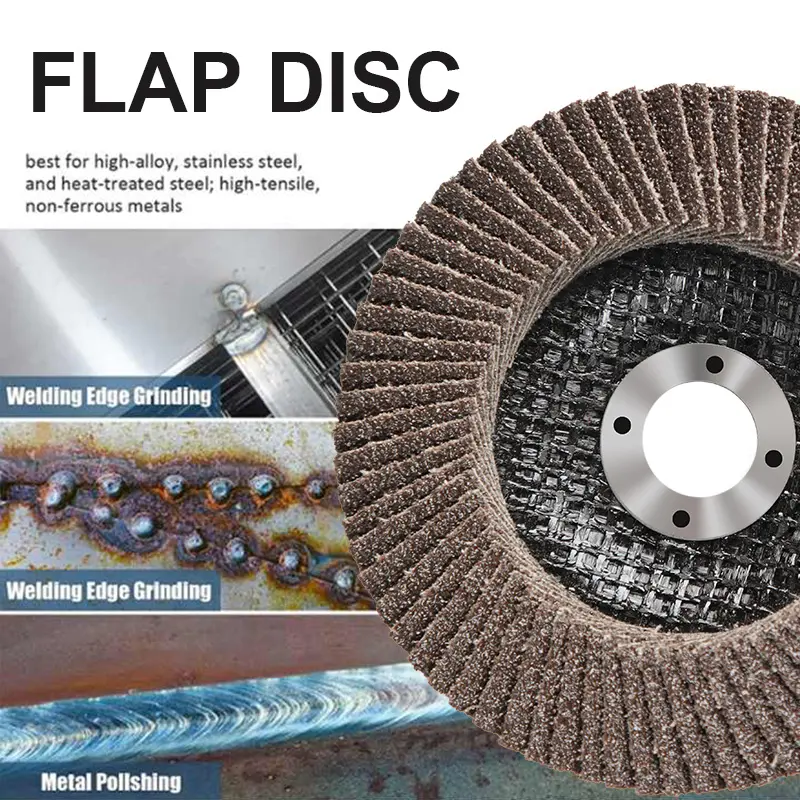
Flap Discs: Versatility in Coarse and Fine Grinding
Flap discs feature overlapping abrasive flaps bonded to a rigid backing, enabling seamless transitions between grinding and finishing. Available in grits from 40–360, they reduce tool changes in multi-stage workflows. Operators using flap discs saw a 67% decrease in rework compared to fixed-grit alternatives in a 2023 market study.
Fiber Discs: High-Speed Cutting for Heavy Material Removal
Built with reinforced vulcanized fiber backings, these discs withstand sustained operation above 12,000 RPM, making them ideal for aggressive stock removal on welds and cast iron. Their heat resistance is critical in automotive and foundry environments where rapid material reduction is required.
Cloth-Based Polishing Discs: Achieving a Mirror Finish
Cotton or sisal-backed discs infused with polishing compounds deliver superior final finishes. Their flexibility conforms to complex shapes while minimizing heat buildup, preventing discoloration on stainless steel and titanium. Research shows cloth discs improve reflectivity by 40–55% over rigid options when used with diamond pastes.
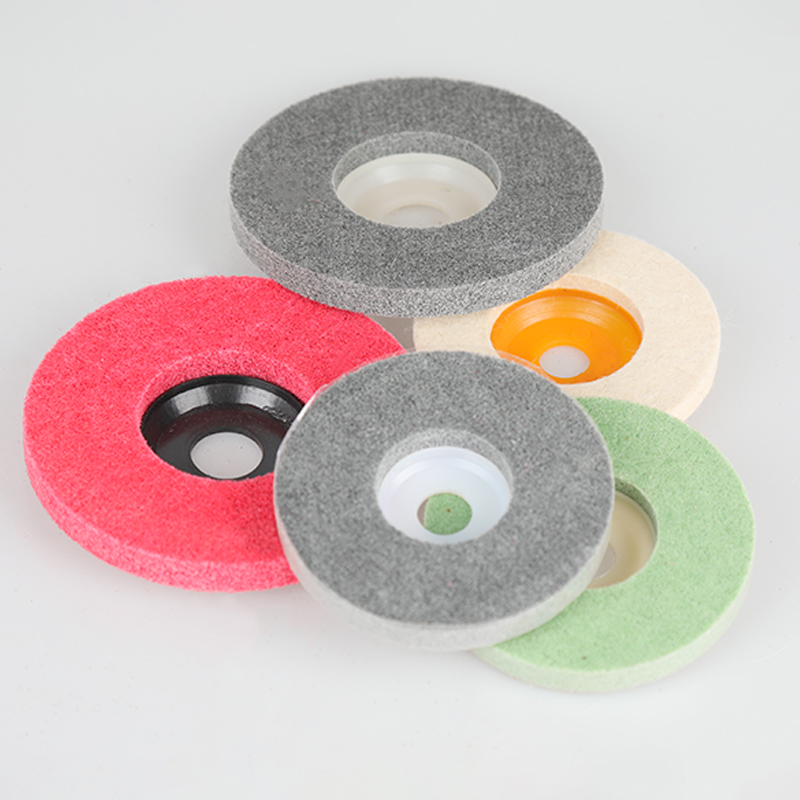
Non-Woven and Abrasive Impregnated Discs for Delicate Finishes
Designed for soft metals like copper and anodized aluminum, these discs use open-structure nylon fibers impregnated with aluminum oxide or silicon carbide. They resist clogging during deburring, especially beneficial in aerospace components with intricate geometries.
Comparison of Backing Materials and Abrasive Grit Configurations
| Factor | Flap Discs | Fiber Discs | Cloth Discs |
|---|---|---|---|
| Optimal Grit Range | 40–360 | 24–80 | 180–1500+ |
| Primary Use Case | Blend grinding | Heavy material removal | Final polishing |
| Heat Dissipation | Moderate | High | Low |
How Polishing Disc Selection Affects Surface Quality and Efficiency
Mismatched discs contribute to 34% of surface defects in fabrication. Using fiber discs for final polishing increases scratch risk, while cloth discs lack the aggression needed for weld removal. Implementing progressive grit sequences with RPM adjustments (8,000–12,000 for coarse, 3,000–6,000 for finishing) optimizes both finish quality and tool life.
Optimizing Polishing Techniques for Superior Metal Surface Results
Mechanical Polishing vs. Buffing & Polishing: Process Differences
Mechanical polishing works by using hard abrasive discs that give surfaces a pretty even finish, usually getting down to Ra values below 0.8 microns. Buffing is different though it uses softer cloth wheels along with special compounds to make things really shiny, but this requires just the right amount of pressure applied. According to some recent industry data from last year, mechanical polishing cuts down on initial surface roughness about half as fast compared to doing it all by hand when workers use properly graded discs. Going too heavy on those coarse grits often leads to crosshatch patterns forming on the surface, which means extra work later on during the buffing process to fix them up.
Step-by-Step Approach to Progressive Grit Polishing
Start with 60–120 grit for heavy removal, transition to 180–400 grit for scratch refinement, and finish with 800+ grit before buffing. Each stage should eliminate 90% of prior grit marks, verified via angled light inspection. For stainless steel, intermediate compounds like aluminum oxide aid transitions while managing heat.
Impact of RPM, Pressure, and Contact Time on Surface Quality
Running coarse discs above 3,500 RPM risks heat-induced microcracks in aluminum. A high-precision molding study showed that maintaining 2–4 lbs/inch² pressure at 2,800 RPM with 240 grit keeps temperatures below 150°F (65°C). Extended contact time (>8 seconds/mm²) improves uniformity with fine grits but may induce work hardening in titanium.
Achieving a Mirror Finish: Advanced Disc Technologies and Best Practices
Why Cloth-Based Discs Excel in Producing a Mirror Finish
Cloth-based discs combine flexibility with fine abrasives to eliminate microscratches and distribute pressure evenly. Their woven structure prevents gouging and adapts to curved surfaces. When paired with diamond or aluminum oxide abrasives, they achieve Ra ≤ 0.1 µm, meeting industrial mirror-finish standards as documented in the 2024 Metal Finishing Report.
Role of Compound Integration in High-Gloss Metal Surface Finishing
Polishing compounds reduce friction and fill microscopic pores, enhancing reflectivity and thermal control. Silica-based compounds increase gloss by 30–40% versus dry polishing, while cerium oxide minimizes swirl marks on stainless steel. Integrated compounds extend disc life by 25% and reduce repolishing efforts, according to the Abrasive Technology Review (2024).
Case Study: Stainless Steel Polishing Using Multi-Stage Disc Systems
A manufacturer reduced rework by 62% using a three-stage system:
- Coarse grinding (60–80 grit): Removed weld seams with fiber discs.
- Intermediate polishing (150–220 grit): Flap discs blended transitions.
- Mirror finishing (400+ grit): Non-woven cloth discs with diamond slurry achieved Ra 0.08 µm.
Common Pitfalls That Prevent Optimal Reflective Finishes
- Inconsistent pressure: ±15% force variation causes uneven gloss
- Skipping grit stages: Jumping to fine grits from 120 leaves visible scratches
- Excessive RPM: Speeds over 10,000 RPM melt soft metals like aluminum
Tips for Maintaining Consistent Finish Quality Across Large Surfaces
- Use robotic arms or guide jigs to stabilize tool angles.
- Divide surfaces into 12"x12" sections, polishing in overlapping circular motions.
- Inspect under LED lamps at 45° angles to detect missed spots.
- Secure sheet metal edges with vacuum clamps to prevent vibration marks.
Projects covering over 10 m² show 92% fewer defects when laser-guided surface mapping tracks progress (Precision Manufacturing Journal, 2023).
Material Specific Considerations in Polishing Disc Selection
Aluminum vs. Stainless Steel: Divergent Abrasives for Metal Finishing Needs
Aluminum’s soft, ductile nature requires non-woven nylon discs (60–120 grit) to prevent smearing and marring. Stainless steel, being harder, performs best with ceramic aluminum oxide discs (36–80 grit), which last 2.3x longer than conventional alumina and cut processing costs by 17%, per a 2023 abrasives study.
Titanium and Exotic Alloys: Challenges in Mechanical Finishing on Metal
Titanium’s low thermal conductivity and tendency to work-harden demand finely graded zirconia discs with controlled pressure below 15 PSI. For cobalt-chrome alloys, diamond-impregnated flexible discs achieve finishes under 0.8 µm Ra while keeping surface temperatures below 150°F—essential for preserving metallurgical integrity.
How Ferrous and Non-Ferrous Metals Respond to Polishing Disc Selection
| Metal Category | Optimal Disc Type | Surface Finish Range (Ra) |
|---|---|---|
| Ferrous (Steel) | Resin-bonded SiC | 1.2–3.2 µm |
| Non-Ferrous (Cu) | Felt w/ Alumina | 0.4–1.6 µm |
Silicon carbide’s friable nature makes it effective on steel, breaking down to expose fresh edges. Aluminum oxide’s rounded profile prevents scoring on copper. For zinc alloys, 800–1500 grit silicone abrasive discs reduce porosity exposure by 62% compared to traditional techniques.
Matching Polishing Discs to Metal Hardness and Thermal Sensitivity
Hard metals (HRC 45+) need structured abrasives with open coatings for heat dissipation—closed-coat discs triple burn risk in tool steels. Magnesium, highly reactive under heat, requires 220V polyester-backed discs and intermittent cycles to stay under 90°C. A progressive sequence of 240–600–1200 grit ensures consistent finishes across varying hardness zones.
Table of Contents
- Understanding Polishing Discs and Their Impact on Metal Finishing
-
Common Types of Polishing Discs and Their Applications in Metal Finishing
- Flap Discs: Versatility in Coarse and Fine Grinding
- Fiber Discs: High-Speed Cutting for Heavy Material Removal
- Cloth-Based Polishing Discs: Achieving a Mirror Finish
- Non-Woven and Abrasive Impregnated Discs for Delicate Finishes
- Comparison of Backing Materials and Abrasive Grit Configurations
- How Polishing Disc Selection Affects Surface Quality and Efficiency
- Optimizing Polishing Techniques for Superior Metal Surface Results
-
Achieving a Mirror Finish: Advanced Disc Technologies and Best Practices
- Why Cloth-Based Discs Excel in Producing a Mirror Finish
- Role of Compound Integration in High-Gloss Metal Surface Finishing
- Case Study: Stainless Steel Polishing Using Multi-Stage Disc Systems
- Common Pitfalls That Prevent Optimal Reflective Finishes
- Tips for Maintaining Consistent Finish Quality Across Large Surfaces
- Material Specific Considerations in Polishing Disc Selection